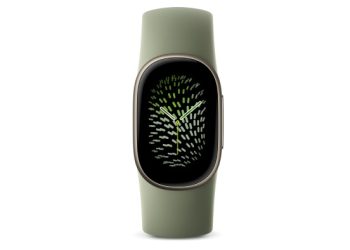


Oura is adding Cardio Effort, a weekly score that tracks how much strain your workouts put on your heart. It also replaces the six-minute walk test with automatic VO2 Max, estimated from your GPS-enabled workouts. The two features don’t share the same availability, so it’s worth knowing which one you’ll actually get.
Automatic VO2 Max is an experimental Oura Labs feature for the Oura Ring Gen3 and later. For Cardio Effort, Oura’s announcement doesn’t state any ring, region or membership requirement.
How Oura’s Cardio Effort score works
Cardio Effort is built on Training Impulse, or TRIMP, a method that combines workout intensity with duration. Oura explains how it differs from its other activity metrics:
“Cardio Effort is different. It is a physiological load metric that measures internal cardiovascular strain: how hard your cardiovascular system was working and how long that demand was sustained.”

It counts live workouts, manually logged ones, and auto-detected sessions once you confirm them. Your weekly total resets to zero each week. It isn’t scored out of 100 and has no fixed maximum. If heart-rate data is missing, Oura labels the figure as an estimated Cardio Effort.
Each week lands in one of five bands:
- Light
- Fair
- Maintaining
- Building
- Reaching
The ranges are personal and based on a rolling six-week window. They appear after two weeks of use. Oura says repeatedly hitting Reaching can be a cue to focus on recovery. It adds that Reaching doesn’t automatically mean you’re overtraining.
There’s one limit to keep in mind. A hard strength session may feel very demanding but still score lower, because Cardio Effort measures heart strain, not muscle load.
Automatic VO2 Max replaces the walk test
Automatic VO2 Max was formerly called Cardio Capacity. Instead of asking you to do a six-minute walk test, the new version works passively. It switches on after you complete five qualifying GPS-enabled activities, such as walks, runs or hikes.
Your estimate appears in the Heart Hub under My Health, in ml/kg/min. Oura sorts it into Low, Fair, High or Peak. You can also save results from a lab test or another device, and these won’t overwrite Oura’s own estimate.
Who gets what
Because automatic VO2 Max sits in Oura Labs, it’s an experimental feature that Oura says may change over time. You’ll need a Gen3 ring or newer.
Oura’s announcement doesn’t say whether Cardio Effort requires a membership. That matters as more wearable makers move features behind subscriptions, as Withings did with Health Connect sync. Until Oura clarifies, don’t assume Cardio Effort comes free with your ring.
Source: Oura