

The Pixel 11 Pro XL has been taken apart on camera by JerryRigEverything, and the headline finding is a good one for anyone planning to keep the phone past its warranty: the two components most likely to fail — the display and the battery — each come out in a matter of minutes, with a heat gun, a suction cup and a thin pry tool.

Why the Pixel 11 Pro XL teardown result matters in money terms
Repairability is usually discussed in the abstract. Here it has a price attached. Google’s own estimates for professional service on the Pixel 11 Pro XL put a screen replacement at roughly $218 and a battery replacement at about $88. On a phone that starts at $1,299, those are the numbers that decide whether a four-year-old handset gets fixed or replaced — and the teardown suggests the DIY route is genuinely open to a careful owner rather than nominally open.
Tester Zack Nelson found the internals neatly laid out, with the T4 screws that have to come out first picked out in mint green so they are easy to identify. Both the front screen and the back panel lift away without a fight. Nelson’s conclusion is that this is among the easiest phones of the year to repair.
One practical caveat, and it is not Google’s fault so much as a matter of timing: iFixit stocks official Google parts, but Android Police reports that Pixel 11 components had not appeared on its storefront at the time of the teardown. Self-repair is only as real as the parts supply behind it, so this is worth watching over the next few weeks.
The scratch result does not match the marketing
The less comfortable half of the video concerns the display. Google promoted the Pixel 11 Pro’s screen at launch as more than twice as scratch-resistant as previous models, courtesy of a new proprietary coating layered over Corning’s Gorilla Glass Victus 2. In the Mohs pick test, the 6.8-inch panel still started marking at level six, with deeper grooves appearing at level seven.
That is the same result ordinary flagship glass has produced for years. It does not mean Google’s coating is fictional — the test uses hardened picks, and the coating is pitched at micro-abrasion from keys and coins in a pocket, which a Mohs pick does not measure. But “more than twice as scratch-resistant” invites a buyer to expect a visibly different outcome from exactly this kind of comparison, and they do not get one. If you care about the screen staying unmarked, a screen protector is still the answer, and no marketing claim about a new coating changes that.
Read alongside the foldable
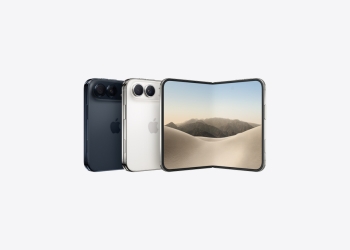
Taken with the rest of this generation, Google’s durability story is uneven rather than bad. The bar-style Pixel 11 Pro XL barely flexes under bending pressure and comes apart cleanly. The foldable in the same line-up did not fare as well: the Pixel 11 Pro Fold broke at the antenna line in the same test series, the fourth Google foldable in a row to fail at that exact seam.
For the Pro XL specifically, though, the takeaway is straightforward. The phone is built to survive normal handling, and when something does eventually go, the repair is not designed to defeat you. That is a low bar the industry frequently fails to clear, and Google clearing it again is worth noting.
Sources: JerryRigEverything (Zack Nelson), via Android Authority and Android Police