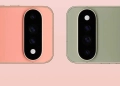

If you carry two physical SIM cards today, the Galaxy Z Fold8 is going to break that habit. Samsung’s 2026 foldables ship with a single nano-SIM slot, so a second line on the Z Fold8 or Z Fold8 Ultra has to be an eSIM — there is no second tray to drop a card into. It is a quiet change, Samsung’s own product pages do not spell it out, and it reverses what the Fold7 offered a year ago.

What changed on the Galaxy Z Fold8
The clearest way to see it is to put the spec listings side by side. Last year’s Galaxy Z Fold7 is listed as Nano-SIM + Nano-SIM + eSIM + eSIM (max 2 at a time) — two physical trays, with eSIM as an extra. Every device in this year’s line-up, the Z Fold8, Z Fold8 Ultra and Z Flip8, is listed as Nano-SIM + eSIM + eSIM (max 2 at a time). One card slot, two eSIM profiles, and a ceiling of two lines active at any moment regardless of how you mix them.
So the maximum number of simultaneous lines has not moved. What has moved is how you are allowed to get to two. On the Fold7 you could run two cards, or a card and an eSIM. On the Fold8 the only combinations left are one card plus one eSIM, or two eSIMs.
The Z Flip8 is listed the same way, so the Fold is where the change sits. It applies to the Ultra as much as the standard model, which is worth saying plainly given the Z Fold8 Ultra starts at $2,099 and ₹1,99,999 in India. Samsung’s India product page for the Fold8 carries no SIM row at all; SamMobile was first to flag the change.
Why a missing SIM tray is a real cost, not a rounding error
“Just use eSIM” is the tidy answer, and it is the one that suits Samsung — dropping a tray frees up internal volume in a phone that is competing on thinness. But a tray swap and an eSIM transfer are not the same kind of task.
A nano-SIM is yours to move. You pop it out, you put it in another phone, it works — no account, no app, no waiting. An eSIM line is a transaction with your carrier every single time it moves. Changing handsets, lending a phone to a family member, or dropping in a local prepaid card while travelling all stop being something you do at a table with a paperclip and start being something you do through a carrier’s support flow, on whatever timetable and in whatever markets that carrier supports. Carriers vary enormously here, and the ones that make eSIM transfers painless are not evenly distributed across the markets where dual-SIM matters most.
That matters more in India, Southeast Asia and other dual-SIM-heavy markets than it does in the US, where eSIM-only phones have been normal for a while. A work number and a personal number on two cards is an ordinary arrangement for a lot of buyers spending two lakh rupees on a foldable, and this is the first Fold in years that will not do it that way.
What to check before you buy
- Confirm both your carriers do eSIM. At least one of your two lines has to become an eSIM profile, so a carrier that only issues physical cards effectively costs you a line on this phone.
- Ask about transfer, not just activation. Getting an eSIM onto the Fold8 is the easy half; getting it off again when you switch phones or send it for service is the part worth asking about first.
- Regional configurations can differ. The above reflects the SIM configurations Samsung has detailed so far. If you buy in a market Samsung treats separately, check the local spec sheet rather than assuming.
- Travelling on local SIMs? Budget for a travel eSIM instead of the airport-counter nano-SIM, or accept that the trip SIM takes over your only tray.
None of this makes the Z Fold8 a worse phone to use day to day, and if you already run one card and one eSIM you will not notice. But it is exactly the sort of spec-sheet detail that a launch keynote skips and a buyer finds out about on day one, which is reason enough to put it in front of people now rather than after the boxes are opened.
Sources: SamMobile, GSMArena (Z Fold8), GSMArena (Z Fold7)