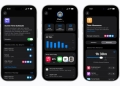

Apple has detailed a new iPhone 18 Pro camera feature designed to prove a photo is real. Called Apple Reference Image, it cryptographically signs a photo the moment it’s captured. That creates a tamper-evident record that a specific iPhone sensor took a specific picture at a specific time. Apple published the technical breakdown on its Apple Security Research blog on September 15.
The feature is opt-in and works only on the iPhone 18 Pro and iPhone 18 Pro Max, and only on the main camera sensor. It’s aimed less at casual photos and more at a growing problem: proving an image hasn’t been AI-generated or edited. That’s something newsrooms, courts, and insurance claims increasingly need to establish.

How it actually works
When Reference Image mode is on, the camera sensor itself cryptographically signs the raw pixel data the instant it’s captured, before any processing touches it. That signed data becomes what Apple calls a secure digital negative, stored on the device with its capture timestamp intact. A photographer who wants to prove authenticity can later submit that negative to Apple’s Private Cloud Compute servers for verification and confidence scoring.
Apple’s stated goal is durability, not just a checkmark at launch. In its own words:
“Apple Reference Image offers a trustworthy, scalable guarantee that a reference image is what it claims to be: a real photograph, captured by a real sensor in an iPhone camera, at a specific time.”
The signature itself combines RSA-3072 with a post-quantum algorithm, ML-DSA-87. Apple says this protects the verification against future quantum computers, not just today’s attacks. If a specific photo or even an entire sensor is later found to be compromised, Apple can revoke it without exposing who took the picture.
How this differs from C2PA
Most existing photo-provenance efforts, including the C2PA standard that Google and several Android camera makers have adopted, attach metadata describing an image’s edit history after the fact. Apple’s system signs the pixel data at the moment of capture instead. Apple argues this closes a gap: a provenance record added after editing has already started can be forged or stripped at any point along the way, with no way for a viewer to catch it.
That’s a real, defensible design difference, not marketing spin. It’s also worth being clear about what it doesn’t do. Reference Image can’t stop someone from photographing an AI-generated image displayed on a screen and passing that off as real. It only verifies that the sensor captured whatever was in front of it, not that the scene itself was genuine.
Why this matters beyond iPhone owners
Photo authenticity is becoming a genuine industry problem as AI image generation gets harder to spot by eye. A cryptographic capture-time signature is a stronger anti-fraud tool than after-the-fact metadata. If Apple’s approach works as described, it sets a bar that Android camera makers and the C2PA coalition will likely face pressure to match. For now, the feature only exists on two phones, and it requires the photographer to remember to turn it on.
Source: Apple Security Research