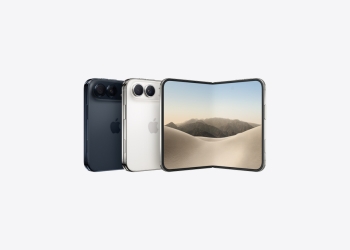


If you were planning to buy a Motorola phone this year and put GrapheneOS on it, don’t. The privacy-focused Android fork has spelled out which Motorola hardware its partnership with the company actually covers, and it is next year’s devices, not the ones on shelves now. The upside: the list includes both of Motorola’s foldables, and GrapheneOS says a vertically folding flip would be a new form factor for it.

Which Motorola phones GrapheneOS will support
Writing on its official Mastodon account, the project said the partnership starts with a conventional slab phone, and that the current crop falls short:
Initial focus for our partnership with Motorola is a regular non-folding device. Current generation Motorola Signature (2026), Razr Fold (2026) and Razr Ultra (2026) are very close to meeting our requirements but lack MTE, adequate secure element integration and other features being added for 2027.
Asked directly whether any shipping Motorola device is supported, GrapheneOS was blunt that none is, and that the 2026 models were named only as a preview of the hardware family the 2027 phones will come from. So the practical eligibility picture today looks like this:
- Not supported, and not going to be: Motorola Signature (2026), Razr Fold (2026), Razr Ultra (2026). They lack memory tagging (MTE) and a good enough secure element.
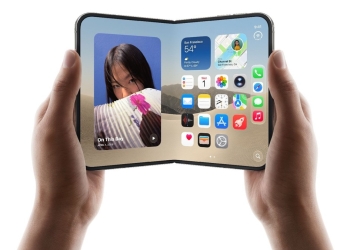
- Planned for 2027: a regular non-folding flagship first, then the horizontal-folding Razr Fold and the vertical-folding Razr Ultra.
- Still on the Pixel roadmap: 11th-generation Pixels, including the Pixel 11 Pro Fold.
The commitment attached to those 2027 devices is the part worth holding Motorola to. GrapheneOS says they will meet or exceed its official requirements, naming seven years of proper updates, a start on the Linux 6.18 LTS kernel, and reset attack protection for firmware boot modes.
A flip phone that runs GrapheneOS
In a separate reply, GrapheneOS said it plans to support both the Razr Fold and the Razr Ultra flip alongside the regular device. It already supports tablet-style folding phones — the original Pixel Fold, the Pixel 9 Pro Fold and the Pixel 10 Pro Fold — but a vertically folding flip would be a new form factor for it, and the project framed the appeal as a small one-handed phone when closed.
Why Motorola, and why now
The reason GrapheneOS gives is workload, not ideology. It says Motorola engineers are doing much of the porting themselves, and that Pixels have quietly become the harder platform: AOSP 16 dropped support for Pixels, leaving them harder to support properly than many other devices rather than easier. It now has to request Pixel kernel driver sources through a Google Forms process and rebuild support that used to be published openly, to the point that it expects supporting the Pixel 11 series could take months rather than the same-day turnaround it once managed.
It also says it is taking no money from Motorola — it wants engineers assigned to the port instead — and that it has not settled how devices will be sold, but wants buyers to be able to purchase ordinary retail units and flash the OS themselves. For US readers, GrapheneOS noted that the Razr Fold and Razr Ultra are sold in the US and it hopes the next generation will be too, while the Motorola Signature was not.
We covered what GrapheneOS has said about where these phones will sit on price last week.
Source: GrapheneOS on Mastodon