

GrapheneOS has put a price bracket on its move to Motorola hardware, and it is the opposite of what most people hoping to escape the Pixel were expecting. The privacy-focused Android project says its first supported Motorola devices, due in 2027, will be high-end flagships that cost more than comparable Pixel phones. The comment came in a reply to a user on Mastodon, reported by Android Authority.

Why the first GrapheneOS Motorola phones will be expensive
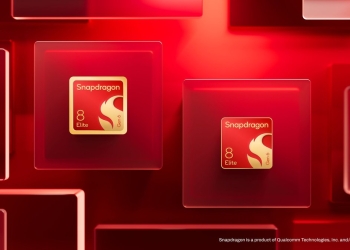
The reasoning GrapheneOS gives is about silicon, not branding. The project says it is starting with flagships because those are the phones carrying the hardware and security features its requirements demand, and it points to the latest Snapdragon flagship platforms as currently offering the strongest security capabilities available.
Cheaper phones are not excluded on principle — they are excluded on timing. Qualcomm manages security features and long-term software support differently across its chip tiers, so the lower-end Snapdragon platforms do not yet meet the same bar. GrapheneOS adds a commercial wrinkle: it expects Motorola will eventually have to pay for longer software support on its non-flagship devices before those phones can qualify at all. Longer support on a budget phone, in other words, is something an OEM buys rather than something the chip comes with.
We covered why Motorola support has to wait for 2027 hardware last month; what is new here is that the wait ends at the top of the range rather than across it.
What GrapheneOS still has not said
No Motorola model has been named. There is no price, no launch window beyond 2027, and no spec sheet — “more than a Pixel” is a direction of travel, not a number. Anyone reading this as a purchase plan should treat it as an early signal about which shelf to look at, nothing more.
The project did also describe how it intends to keep the software current. It plans to prepare its releases early so that builds are ready when major Android versions launch, and expects to push code to its own repositories at that point — though doing so means hosting all the relevant AOSP Git repositories itself. That is a substantial infrastructure commitment, and it is the part that determines whether a GrapheneOS Motorola phone actually tracks Android releases or lags them by months, which has always been the practical difference between a privacy ROM you can daily-drive and one you cannot.
The uncomfortable part for buyers
Strip away the project’s specific reasoning and the structural point stands on its own: the strongest privacy option on Android is being priced as a premium product because the hardware guarantees it depends on are sold as a premium feature. Verified boot, hardware-backed key storage and a long tail of security patches are not exotic — they are just concentrated at the top of the market, because that is where chipmakers and OEMs choose to put them.
That leaves the people with the least room to spend facing the widest gap. A buyer on a $200 phone is not choosing weaker privacy; they are being sold hardware that forecloses the choice, and GrapheneOS’s own explanation is that the fix depends on Motorola deciding to pay for support it currently does not. None of this is a criticism of the project, which is being unusually candid about a limit it does not control. It is a reminder that “you can always flash a privacy ROM” has quietly become advice for people who can afford a flagship.
Note that GrapheneOS’s remarks are a reply within a Mastodon thread rather than a formal announcement, so treat the detail as the project thinking out loud about its roadmap — accurate as to intent, not a commitment to a spec or a date.
Source: GrapheneOS on Mastodon, via Android Authority