

Apple’s new VP of Hardware Engineering has a blunt message for anyone worried the iPhone Duo’s crease will get worse over time, and an even blunter one for anyone planning to slap a screen protector on it. Tom Marieb, who took over the hardware engineering role previously held by CEO John Ternus, spoke to TechRadar at Apple’s London office about why he’s confident in the foldable’s hinge and its Ceramic Shield 2 coating.
Why the Crease Looks the Way It Does
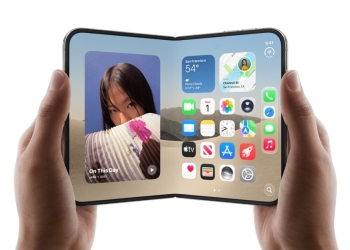
The iPhone Duo’s 7.6-inch inner display uses a matte, nano-texture finish rather than a glossy one. Asked why creases can become more visible over months of use on foldables generally, Marieb pointed to that finish as a deliberate choice, not just an anti-glare feature. He explained that glossy displays make it easy to pick up small surface irregularities because of how they reflect light, and said Apple chose the matte finish partly because it hides those changes better over time, on top of cutting down glare.

In plain terms: a glossy screen reflects light in a way that makes small surface irregularities, like a crease, stand out more sharply. The matte texture scatters that light instead, so the same physical crease is harder to see. That’s a claim about visibility, not about whether the crease itself is smaller or shallower than on competing foldables — Apple hasn’t published numbers on crease depth, and Marieb’s answer doesn’t offer any.
The Hinge Is What He’s Most Proud Of
Marieb singled out the hinge mechanism as the part of the Duo he’s personally most satisfied with, telling TechRadar it took Apple’s engineers a long time to get right and adding that Apple worried users would assume the phone’s thinness meant fragility.
That framing is worth reading carefully. Samsung and other foldable makers have spent several hardware generations on hinge durability, and reviewers still flag hinge wear and dust ingress as recurring weak points years into the category. Apple is a first-time entrant here, so confidence from its own hardware chief is not the same as an independently verified durability result. The Duo hasn’t been in the hands of reviewers or everyday users long enough for that kind of track record to exist yet.
Marieb’s Take on Screen Protectors
On Ceramic Shield 2, the coating Apple uses on the Duo’s front glass, Marieb was more openly opinionated, saying screen protectors undermine the work Apple put into the display’s finish.
“Personally, when I see someone put a screen protector on their iPhone, it makes my skin crawl, because we work so hard to make beautiful front screens,” Marieb told TechRadar.
He said Apple developed coatings meant to resist both scratching and general wear without a protector layered on top. That’s a reasonable engineering goal, but it’s also a convenient position for Apple to take in public: screen protectors are inexpensive, third-party accessories that cost Apple nothing and cover up display damage Apple would otherwise be asked to repair. A buyer who takes this advice literally and skips a protector is the one carrying the risk if Ceramic Shield 2 scratches in daily use, not Apple.
What This Doesn’t Tell You
Everything above is Apple’s own hardware executive explaining his own team’s design choices, in an interview Apple’s PR team arranged. None of it is an independent durability test. If crease visibility, hinge longevity, and scratch resistance matter to your buying decision, real-world use and third-party teardown or drop-test data over the coming months will be a better guide than a single interview.
Source: TechRadar