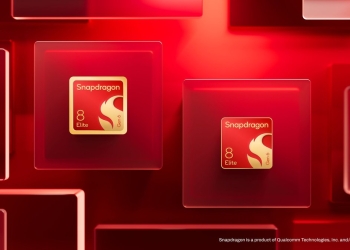


Indian audio brand Mivi, known so far for earbuds and speakers, has confirmed it is entering the smartphone business with a 5G phone landing in India in September, powered by a Snapdragon chipset.

What Mivi has actually confirmed about its first smartphone
In an official post on X, Mivi teased the handset in a green colourway with a flat rear panel and a flat frame with rounded edges, under the tagline “Pretty Powerful.” A live marketing poster on Flipkart is doing the teasing too, which settles where the phone will be sold.
Beyond the Snapdragon chip, the September window, and Flipkart as the retail partner, very little is official. ETV Bharat is explicit that “details such as the name, specifications, exact launch date, and pricing are yet to be revealed officially.”
Two caveats worth flagging, because they are circulating as though they were confirmed. GSMArena relays an unattributed report that the phone will be priced below ₹15,000, and that it would be the only phone at that price in India with a Snapdragon chip. The price is a report of a report with no named source behind it, and the “only phone in the segment” line is a sweeping claim nobody has demonstrated. Neither belongs in a buying decision yet. A specific September 26 launch date is also being repeated in some coverage; it does not appear in either of the sources here, both of which say the date is unannounced.
Why an audio brand is betting on phones now
Mivi is not moving alone. Fellow Indian brand Fire-Boltt, previously known for affordable smartwatches, launched its own first phones — the Boltt Ace 5G and Boltt Evo 4G — on Flipkart on August 25, 2026. Building a sub-₹15,000 phone that survives contact with the Indian market is a hard problem regardless of who is behind it — it needs chipset supply deals, service-centre coverage, and a retail relationship that does not collapse after the first sale. Mivi has reportedly brought in Himanshu Tandon, the former head of Poco India and former Vice President of CMF by Nothing, as its chief business officer, according to ETV Bharat — a hire that points to Mivi treating this as a real product line rather than a one-off white-label experiment.
What this could mean for budget buyers in India
The timing is not accidental. Phone prices have been drifting upward on the back of memory-chip costs, and the pressure lands hardest at the bottom of the market, where a few hundred rupees of bill-of-materials decides whether a spec survives to shipping. More brands competing under ₹15,000 is straightforwardly good for buyers, if the phones are any good.
That “if” is the part to hold onto. A first-generation phone from an audio company carries real risk that a spec sheet will not show: how long software updates last, how many security patches arrive, and whether there is a service network when something breaks in month fourteen. Those are the questions to ask Mivi when it announces the phone, and they matter more at this price than the chipset name on the teaser. We will update once Mivi confirms the model, the date and the price.
Sources: ETV Bharat, GSMArena