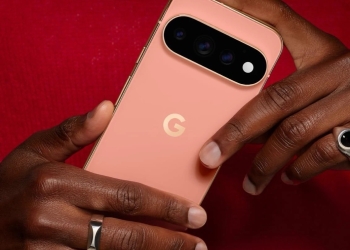

Google has signed sponsorship deals with five of Europe’s biggest football clubs — Arsenal, FC Barcelona, FC Bayern München, Liverpool and Paris Saint-Germain — taking the titles of Official Consumer AI and Official Smartphone Partner at each, according to its announcement. It is a marketing agreement rather than a product announcement, and it is worth being precise about that up front: nothing in Google’s post is a new Pixel or Gemini capability.

What Pixel owners actually get
Stripped of the framing, the announcement contains two concrete things for a person holding a phone.
- Official club wallpapers for the Pixel 11 — and Google’s own wording is that you “can already” apply them, so this is live, not forthcoming
- Behind-the-scenes club content shot on Pixel, produced by the clubs’ own media teams and published through the clubs’ social channels under Google’s existing “Shot on Pixel” series
The Gemini half is described in terms of what the assistant already does. Google says supporters can “dive deeper into match and club insights”, settle head-to-head debates and get answers during a game — that is the Gemini app as it ships today, pointed at football. No club-specific model, data feed, or app integration is announced anywhere in the post.
The terms Google did not publish
Google’s announcement describes the deals only as “new long-term partnerships” with no length, value or exclusivity attached. Paris Saint-Germain’s own press release is more specific than Google’s: it calls the deal a “Premium Partnership through 2029”, names Gemini the club’s Official AI Assistant and Pixel its Official Smartphone, and adds details Google leaves out entirely — a dedicated Google space at the Parc des Princes for partners and creators, and Google support for integrating its technology across club departments. Jean-Philippe Becane, Marketing Director of Google France, is quoted in that release saying Google is “proud to become a Premium Partner of Paris Saint-Germain”.
No financial figures appear in either document, and the other four clubs’ terms are not disclosed. Treat any number you see attached to these deals as unsourced.
The women’s football commitment
The most substantive commitment in the announcement is the one least tied to selling phones. Google says it is “partnering equally across both men’s and women’s teams” and frames a broader aim, in its own words: “A fundamental part of these partnerships is our commitment to help closing the visibility gap in women’s football.” The post notes that record crowds are turning up for women’s tournaments while media coverage lags.
Equal partnership across both squads is a meaningful structural commitment if it holds, and it is more than most technology sponsorships specify. It is also, for now, a stated intention with no published measure attached — no content volume, no spend split, no reporting. Whether it amounts to anything is checkable in a season’s time by simply counting what the clubs publish.
For anyone hoping this signalled a Pixel feature aimed at sports — live match cards, a club mode, something in the Pixel 11’s feature set — it does not. The post is bylined Eileen Mannion, Google’s VP of Marketing for UKI and EMEA Devices and Services, which is a fair signal of what this is: a European brand-marketing push timed to the start of the season, arriving as Pixel tries to grow share in markets where Samsung and Apple dominate — a rather different lever from the discount-led push Google is running in the US. The wallpapers are free. The rest is a logo on a shirt sleeve.