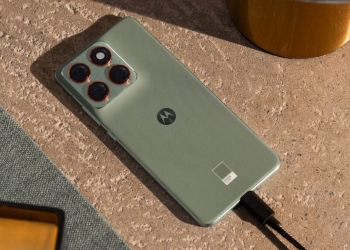

Samsung’s upcoming Galaxy S26 FE has cleared the FCC, confirming it is headed to the US market — and the filing reveals an unusual chipset arrangement. The device pairs Samsung’s own Exynos processor and cellular modem with a Qualcomm FastConnect chip handling Wi-Fi, a combination not seen in its predecessor.
The Galaxy S25 FE relied entirely on Samsung’s in-house wireless technologies. This time, Samsung appears to have outsourced the local networking component to Qualcomm, likely for advantages in cost, power efficiency, or reliability over its own Wi-Fi silicon. The cellular modem and main processor remain Samsung LSI (Exynos), so this is not a regional chip split — US buyers should expect an Exynos-powered device, not a Snapdragon variant.

Galaxy S26 FE: What the FCC Filing Confirms
Beyond the chipset details, the filing lists several concrete hardware capabilities:
- Charging: 45W wired charging, matching the S25 FE, plus reverse wireless charging
- Connectivity: Wi-Fi 6, NFC, and satellite connectivity comparable to T-Mobile’s direct-to-cell service
- Camera layout: An oval-shaped vertical camera island in the upper left corner with three individual sensors
Separately, leaks point to the Exynos 2500 — the same 3nm chip that debuted in the Galaxy Z Flip 7 — as the main processor. Rumored specs include a 6.7-inch display, 8GB of RAM, storage options of 128GB, 256GB, and 512GB, and a 4,900mAh battery. Expected colors are Graphite, Mint, and Violet.
Pricing and Availability
Samsung has not announced the Galaxy S26 FE officially. A prior leak suggested European pricing starting at EUR 799 for the 128GB model, climbing to EUR 1,099 for 512GB. The FCC clearance, combined with recent reports, points to a launch in early September 2026, most likely at IFA in Berlin.
The Exynos-plus-Qualcomm arrangement is worth watching. If Samsung is cherry-picking Qualcomm’s Wi-Fi silicon over its own even for the budget flagship, it raises questions about whether the company’s in-house connectivity stack is keeping pace — and whether similar hybrid configurations could appear in future Galaxy devices.
Sources: FCC filing, via Android Authority and GSMArena