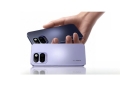

Samsung’s latest foldables have set a new company record in South Korea. The Galaxy Z Fold 8, Z Fold 8 Ultra, and Z Flip 8 collectively drew 1.44 million preorders in just seven days, surpassing the Galaxy Note 10’s longstanding record of 1.38 million set over 11 days back in 2019.

The preorder window ran from July 28 through August 4, with Samsung logging roughly 140 units sold per minute. For context, the Galaxy S26 series managed 1.35 million preorders in March this year, while last year’s Fold 7 and Flip 7 hit 1.04 million — making this a 39 percent year-over-year jump for the foldable line.
Galaxy Z Fold 8 Dominates Preorder Demand
The standard Galaxy Z Fold 8 accounted for approximately 70 percent of all preorders, with the Z Flip 8 and the new Z Fold 8 Ultra splitting the remaining 30 percent. Samsung’s decision to widen the Fold 8’s form factor appears to have resonated — in South Korea at least, the wider-screen book-style foldable is clearly the one buyers want.
Notably, female buyers of the Z Fold 8 and Z Fold 8 Ultra more than doubled compared to the Fold 7 generation, and consumers aged 13 to 39 made up around half of all online purchases, suggesting the foldable form factor is reaching a broader demographic than before.
Pricing and Global Availability
In South Korea, the Galaxy Z Flip 8 starts at 1.68 million won (approximately $1,179), while the Z Fold 8 begins at 2.28 million won. Global sales kick off on August 7 across more than 100 countries. For India pricing details, Samsung has already confirmed the lineup starting at Rs 1,24,999 for the Z Flip 8.
These numbers are particularly notable given that Samsung raised prices this generation, citing memory chip shortages and scaling back promotional incentives like free storage upgrades. Higher prices and still-record demand is an unusual combination — it signals genuine consumer appetite for foldables rather than deal-driven volume. Whether that momentum holds once the launch honeymoon ends and real-world reviews come in is the question worth watching.
Sources: The Korea Herald, Seoul Economic Daily