

Samsung has given the most detailed account yet of how its smart glasses were engineered — and of the privacy safeguards built into them — at a press briefing held in London on Thursday, the day after Galaxy Unpacked. Choi Jae-in, executive vice president and head of the XR development team in Samsung’s Mobile eXperience Business, spoke about durability testing, battery engineering and anti-recording measures. What he did not give was a price or a launch date beyond “later this year.”

Samsung’s pitch: phone-grade testing on a pair of glasses
Choi’s framing is that Samsung’s advantage is not the glasses themselves but the phone in your pocket. He described the product as an extension of the smartphone rather than a replacement for it, with heavy work — image post-processing, AI translation, navigation — offloaded to the connected handset rather than run on the frame.
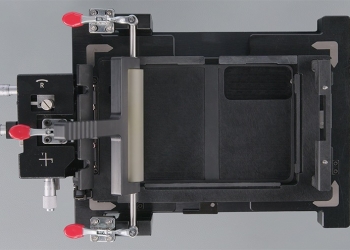
The durability claims are where the briefing got specific. Samsung says it applied smartphone reliability standards — drop tests, resistance to outdoor conditions, chemicals including sunscreen and cosmetics, and hinge testing that reuses work done for its foldables — and devised more than 20 new test methods specifically for eyewear. Choi described the sunscreen test at the briefing, as reported by the Korea JoongAng Daily:
“We injected alcohol-based, high-performance sunscreen into the open-ear speakers on the outside of the frames, raised the temperature and applied vibrations to make sure it seeped all the way in,” Choi said. “We then tested the speakers’ performance more than 100 times.”
On battery life, Samsung says it set up a “Power Camp” with Google and Qualcomm in which more than 50 hardware, software and chip engineers worked on power efficiency together. The stated result is up to nine hours on a single charge.
What Samsung has actually confirmed
- Design partners: intelligent eyewear designed with Gentle Monster and Warby Parker, built on Google’s Android XR platform with Gemini
- Type: voice-based, non-display glasses — no lens projection, no screen
- Silicon and battery: a Qualcomm wearable chipset, up to nine hours per charge
- Galaxy tie-ins: a Galaxy Watch works as a gesture controller, audio hands off to Galaxy Buds, and Samsung Notes, Gmail and Google Maps are accessible from the glasses
- Patents: more than 200 secured over several years of development, around 10 percent of them on privacy and protection
- Price: no figure; Choi said it should sit “in the premium range” initially
- Availability: later in 2026, no market list
The privacy features, and what they don’t fix
Samsung’s covert-recording safeguards are an LED that lights when the camera is active, an on-body detection sensor that disables image capture once the glasses are taken off and set down, and measures Choi said are designed to stop deliberate bypassing — including blocking recording if the indicator is covered.
That is more thought than this category usually gets, and the 10-percent patent figure suggests it isn’t an afterthought. But two things are worth saying plainly. An indicator light manages the wearer’s disclosure, not the bystander’s consent: the person across the table still has to notice a small LED on a frame designed to look like ordinary glasses, and has no way to opt out. And every one of these protections is currently a claim. The Korea Times reports that Samsung showed the glasses at Unpacked without disclosing detailed specifications and without letting attendees try them on, so nobody outside Samsung has tested whether covering the indicator really stops a recording.
Samsung is entering a market Meta owns. Omdia figures cited by the Korea JoongAng Daily put global smart-glasses shipments at 8.7 million units last year, up 322 percent, with Meta accounting for 7.4 million of them — an 85.2 percent share — and forecast more than 15 million units this year. Samsung’s answer is a premium price it won’t name, on a launch date it won’t give, for hardware nobody has been allowed to wear. Judge it when there is a price, a date and a review unit.
Sources: The Korea Times, Korea JoongAng Daily