

Nearly one in three deals Amazon promoted for Black Friday and Cyber Monday were no cheaper than a price from the prior 30 days. That’s the finding of a new study from Groundwork Collaborative, a progressive economic-policy advocacy group.
The data covers the 2024 and 2025 sale events, not this year’s sales. Still, with Black Friday week about to start, it’s a useful reminder to check a deal before trusting its badge.

What the Amazon Black Friday deals study found
Groundwork tracked 351 unique products that Amazon itself promoted on its deals pages across four sale events. It pulled their price history from Keepa, a third-party Amazon price tracker, using the lowest daily price recorded.
- 30-day check: 29.1% of deals were the same price as, or higher than, the item’s lowest price in the prior 30 days.
- 90-day check: 57.3% were no cheaper than a price available in the prior 90 days.
- 10-day check: 23.5% were no cheaper than a price from just the 10 days before the sale.
- Priced higher: 9.4% of deals were actually above the item’s low from the preceding month, and 27% were above the 90-day low.
For items that had been cheaper earlier, the median deal sat 19% above the lowest price of the previous 30 days. Half of the no-saving items had also sold at or below the sale price on at least 8 of those 30 days.
The report’s own conclusion is measured:
These findings give pause to the notion that Amazon’s sale events always offer shoppers the guaranteed best times to stock up on household essentials or save on holiday gifts.
Watch, fitness band and headphone examples
Several of the study’s examples are gadgets. An Apple Watch Series 10 (GPS + Cellular, 46mm, gold titanium) was on sale for $679.99 during Black Friday 2025. Nearly a month earlier, it had sold for $602, so the deal price was 13% above that recent low.
- Fitbit Charge 6: on sale at $99.95 for Cyber Monday 2025, the same price it had 20 days before the event.
- Beats Solo 4: on sale at $129.95, a price it had already hit 12 days before Black Friday 2025.
What the study doesn’t show
This doesn’t mean every Amazon deal is fake. By the 30-day measure, about seven in ten promoted items really were cheaper than their recent low. The sample is also limited to 351 items Amazon chose to feature. And the report comes from a group that is openly critical of Amazon.
The bigger issue for shoppers is presentation. A deal badge and a struck-through list price compare the sale price with a reference number. They don’t tell you what the item actually sold for last week.
How to check if a Black Friday deal is real
- Look up the product’s price history on Keepa or CamelCamelCamel before you buy. Keepa is the data source Groundwork used for this study.
- Compare the deal price with the lowest price of the last 30 and 90 days, not with the struck-through list price.
- Set up a price watch ahead of time, for example with our guide to tracking Black Friday prices with a Gemini scheduled task.
- If the item recently sold at the same price, there’s no reason to rush during the sale window.
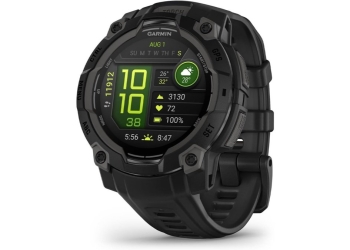
We’ve also covered recent price drops on wearables, including the Pixel Watch 5 at $299.99 and the Garmin Instinct 3 AMOLED at $249.99. Google’s own Black Friday sale starts November 19. Whichever deal you’re eyeing, check its price history first.
Source: Groundwork Collaborative