

Google Research has published a peer-reviewed study in Nature on a smartwatch system that flags likely hypertension. It reads the watch’s optical and motion sensors over several days and needs no calibration against a cuff. In a 196-person US clinical study, it caught about two in three people who had hypertension.

That also means it missed about a third of them. Google says the research helped inform the Blood pressure trends feature in Health Guardian. That feature lives in the Google Health app on Pixel Watch 3 and later. Yet the same blog post says the work is exploratory and not indicative of any product feature.
How the smartwatch hypertension system works
The system combines photoplethysmography (PPG), the optical pulse signal most smartwatches already capture, with accelerometer data. That includes the ballistocardiogram, the tiny wrist vibrations each heartbeat produces. It also uses your height.
It doesn’t give systolic or diastolic readings. Instead, it averages many 15-second samples taken over multiple days into a single hypertension probability score. The AI model was first pre-trained on 492,347 hours of unlabelled sensor data from 2,109 consenting participants.
The clinical study ran at five US sites with Beth Israel Deaconess Medical Center and Harvard Medical School. Its 196 participants had no known cardiovascular disease and weren’t taking blood pressure medication. They wore the watch for seven days of normal life. Results were checked against 24-hour ambulatory blood pressure monitoring, the clinical gold standard. The Nature paper describes the device only as a widely available consumer smartwatch.
How it compared with a blood pressure cuff
Sensitivity is the share of people with hypertension the test caught. Specificity is the share of people without it who were correctly cleared. Positive predictive value (PPV) is how often a positive flag turned out to be right.
As a first screen, the watch beat a single office check, though both missed many cases:
- Smartwatch: 65.8% sensitivity, 90.0% specificity, 80.6% PPV
- Office blood pressure check: 55.3% sensitivity, 90.0% specificity, 77.8% PPV
So the watch still missed about a third of people with hypertension, even while outperforming a first office reading.
The researchers also tested confirmation in 48 people whose office readings were elevated. Here, multi-day home cuff monitoring still caught the most cases:
- Smartwatch: 78.4% sensitivity, 90.9% specificity, 96.7% PPV
- Return office visits: 67.6% sensitivity, 63.6% specificity, 86.2% PPV
- Home cuff monitoring: 89.2% sensitivity, 81.8% specificity, 94.3% PPV
Research versus the feature on your wrist
Google’s blog post, by researchers Paolo Di Achille and Ming-Zher Poh, says these findings helped inform Health Guardian’s Blood pressure trends. The same post also carries this caveat:
This work represents early feasibility research and methodologies described here are purely exploratory and are not indicative of any existing or upcoming commercial product feature or device capability.
Both statements sit in one post, and Google doesn’t reconcile them. Buyers are left unsure how much of the study’s accuracy carries over to the feature they can actually use.
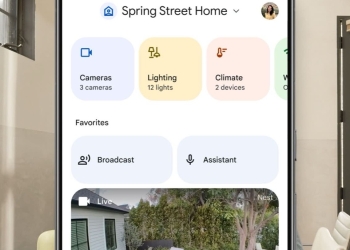
Blood pressure trends needs Google Health app version 5.09 or higher. It works on Pixel Watch 3 and later, Google Fitbit Edge and Google Fitbit Air, but not third-party wearables. You need at least five continuous days of wear a month, with eight hours a day of good signal quality.
Google’s help page says the feature is for general wellness only and isn’t meant to diagnose any condition. It also says a Not High result shouldn’t be read as ruling out a medical problem. A High result prompts you to take seven days of readings with an upper-arm cuff and share them with your doctor.
The study’s own numbers back that up. A watch that missed about a third of hypertension cases isn’t a reason to skip a cuff check. If you’re worried about your blood pressure, use a validated upper-arm cuff and see a doctor. Google Health 5.12 also lets you log cuff readings manually in the app.
Sources: Google Research, Nature, Google Health Help