

Huawei has taken its 2026 wearables line-up global, led by the Watch 6 and Watch 6 Pro. Alongside them are worldwide releases of the Watch GT 7 and GT 7 Pro, which launched in China last month, plus the blood-pressure-focused Watch D3 and the FreeBuds Neo earbuds. UK pricing runs from £119.99 for the earbuds to £599.99 for the top watch, with most of the range on sale from 23 September.
Huawei Watch 6 and Watch 6 Pro
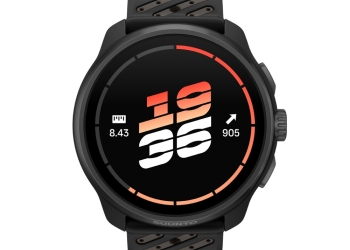
The Watch 6 comes in 42mm and 46mm sizes, the Watch 6 Pro in 43mm and 46mm. The 42mm Watch 6 weighs 38 grams without a strap, making it the lightest of the four. Materials separate the two tiers: aluminium alloy and stainless steel on the Watch 6, titanium on the 46mm Watch 6 Pro Space Edition, Silver and Brown, and nano-tech ceramic on the 43mm Ceramic Edition and White.
- Display — LTPO OLED with artificial sapphire glass on every model; 3,000 nits peak on the Watch 6, 3,500 nits on the Watch 6 Pro
- Battery — around 3 days typical use on the 42mm and 43mm models (7 days in battery saver), 4.5 days on the 46mm models (up to 11 days in battery saver)
- Health tracking — heart rate, SpO2, sleep, ECG, HRV, sleep breathing awareness, pulse wave arrhythmia analysis and arterial stiffness detection
- Sports — over 100 modes, with dedicated skiing, cycling and golf profiles; the Pro models add the Expedition app with waypoints, offline colour maps and return navigation
- Connectivity — optional eSIM on every model, and dual-phone pairing that works with both Android and iOS
- Gestures — a new wrist-flick to silence calls and alarms, plus double-tap and double-slide pinch
The returning X-Tap sensor is the flagship feature. Huawei says it now adds hypertension, diabetes and coronary heart disease risk studies, bringing it to 14 health metrics, and claims it has doubled the sensor’s sensitivity while expanding it from 4 to 12 channels. Read that carefully. Those are Huawei’s own figures, and the sources do not describe these risk features as cleared by any medical regulator. Treat them as wellness indicators, not diagnoses.
Huawei Watch D3 and its blood pressure cuff

The Watch D3 is the genuinely different product here. Its strap contains an airbag that physically inflates to measure blood pressure at the wrist, which is a real cuff rather than an optical estimate. That is the distinguishing feature of Huawei’s D series, and it puts the D3 in a different category from a smartwatch that infers blood pressure from an optical sensor.
Huawei has slimmed the aluminium chassis to 11.3mm while holding the weight at 40 grams, and the airbag is 1mm narrower than before. The display grows slightly to 1.92 inches, an LTPO AMOLED at 480 x 408 with 3,000 nits peak brightness — a large jump from the D2’s 1,500 nits. It keeps 24-hour ambulatory blood pressure monitoring with trend reporting, and Huawei says night-time measurements are now quieter. New this generation are pre- and post-exercise blood pressure readings. Health Glance still produces a report across 11 indicators in about 60 seconds.
Battery is 540mAh, rated for up to 6 days, and connectivity moves to Bluetooth 6.0. It costs £399.99 and arrives in Mocha Gold and Black.
Watch GT 7, GT 7 Pro and FreeBuds Neo
The global GT 7 and GT 7 Pro are identical to the Chinese versions. The GT 7 comes in 41mm and 46mm with a 1.32-inch or 1.47-inch AMOLED at 3,000 nits; the Pro is 46mm only, in titanium alloy with a nanocrystalline ceramic back, versus stainless steel and fibre composite on the standard model. Both carry optical heart rate and skin temperature sensors, and only the Pro adds ECG. Battery runs 7 days on the 41mm GT 7 and up to 12 days on the 46mm models, stretching to 14 and 21 days under lighter use, with up to 51 hours of continuous GPS in running mode on the larger watches.
The FreeBuds Neo bring dual-channel noise cancellation rated up to 30dB, Huawei’s third-generation audio chip with lossless transmission up to 2.3Mbps, spatial audio and dual-device pairing across Android, iOS and Windows. They come in Stellar Silver, Nebula Pink, Ice White and Starry Black.
Pricing and availability
- Huawei Watch 6 — from £399.99
- Huawei Watch 6 Pro — from £599.99
- Huawei Watch GT 7 — from £279.99
- Huawei Watch GT 7 Pro — from £379.99
- Huawei Watch D3 — £399.99
- Huawei FreeBuds Neo — £119.99
The Watch 6, Watch 6 Pro, Watch D3 and FreeBuds Neo go on sale from 23 September. No on-sale date has been given for the Watch GT 7 and GT 7 Pro in the coverage of the announcement, so treat those two as priced but undated for now. Huawei is running two early-order discounts: £50 off the GT 7 pair for orders placed until 13 October, and £20 off the FreeBuds Neo until 26 October. These are UK prices. Separate euro figures have been reported for some of these products, and they do not line up as conversions of the sterling ones, so treat the two as independent regional price lists.
One practical caveat before anyone spends £599.99. Huawei’s watches run HarmonyOS and pair with Android through the Huawei Health app, and that app is not listed on the Google Play Store — its Play listing returns a 404, and Huawei distributes it from its own site and AppGallery instead. Installing it is straightforward, but it is still a step outside Play’s update and review process, and it is the sort of friction a Galaxy Watch or Pixel Watch buyer never encounters. Factor that in alongside the hardware.