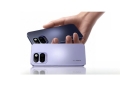
Reliance Jio has put the JioTag 2 on sale in India at Rs 1,249, and the interesting part is not the price on its own — it is that this single tracker works with both Google’s Find Hub on Android and Apple’s Find My on iPhone. Jio previously sold two separate single-platform trackers, the Android-only JioTag Go and the iOS-only JioTag Air. Both are listed at Rs 1,499 on Jio’s own website, but neither actually sells for that — on Amazon India the JioTag Go is Rs 999 and the JioTag Air is Rs 449. Cross-platform support, in other words, costs you extra.

JioTag 2 price and availability in India
The JioTag 2 sells for Rs 1,249 on Amazon India, where it is listed under the longer name “JioTag (2nd Generation)” — the retail box itself just says JioTag 2. Amazon lists three variants, named Grey, Olive and Red. Several outlets covering the launch described the colours as black, green and red, so expect some inconsistency between coverage and the names on the listing itself. Bank offers are reported to knock roughly Rs 50 off, taking the effective price to about Rs 1,199, though card offers rotate and are worth checking on the day.
You can buy the JioTag 2 on Amazon India. Jio’s own JioTag landing page still lists only the JioTag Go and JioTag Air at the time of writing, and there is no JioMart listing yet, so Amazon is currently the place to find it.
What the JioTag 2 does
It is a Bluetooth Low Energy fob with a hole for a keyring, meant for keys, a wallet, a bag or a suitcase. There is no SIM slot and no subscription — location reporting piggybacks on the crowd-sourced finding networks, so when your keys are out of Bluetooth range, other people’s phones passing nearby are what report the approximate position back to you.
- Networks — Google Find Hub on Android and Apple Find My on iOS. Jio’s listing says the tracker is usable with both, but does not spell out whether it joins both networks at once or whether you pick one when pairing. That distinction matters and Jio has not clarified it.
- Speaker — 120dB, triggered from the app to find the tag once you are within Bluetooth range.
- Battery — a replaceable cell rated for about a year, with a spare included in the box. The widely quoted “two years of battery” is that one year plus the spare, not a two-year cell.
- Durability — IP64, meaning dust-protected and safe against splashes, not submersion.
- No ultra-wideband — nothing in the listing mentions UWB, so expect proximity guidance by signal strength and a map pin, not the precise arrow-on-screen direction finding that a Samsung SmartTag2 or an AirTag gives you.
Why cross-platform matters, and the catch that comes with it
Splitting a tracker into an Android SKU and an iOS SKU has always been a bad deal for buyers, because a tag bought for one phone becomes worthless the moment you switch platforms or hand it to someone in a mixed-device household. One product that covers both survives a phone switch, and that is a real improvement.
It is not a free one, though, and Jio’s own Rs 1,499 list price for the older tags obscures that. Against the street prices people actually pay, the JioTag 2 is Rs 250 more than a JioTag Go and roughly Rs 800 more than a JioTag Air. If you are firmly on Android and expect to stay there, the cheaper Find Hub-only JioTag Go does the same job for less. The JioTag 2 earns its premium in a mixed-device household, or if you think you might move between Android and iPhone — not otherwise.
The caution is the one that applies to every cheap tracker, and it is worth saying before the marketing does: a small, silent, network-connected locator is as good at following a person as it is at finding luggage. Both Android and iOS have unknown-tracker alerts built in, but their usefulness depends entirely on how fast they fire and how well a third-party tag is registered with each network. A tracker that spans two ecosystems has to get that right twice. If you buy one, the first thing worth testing is not the range — it is whether a phone that is not yours notices the tag at all.
For context on where the category is heading, Google’s own first-party tracker surfaced in European retailer listings on Friday ahead of its 12 August event.
Sources: Fone Arena