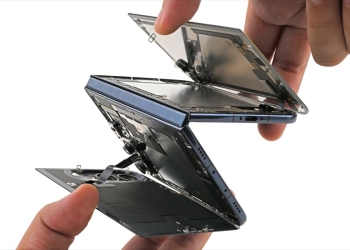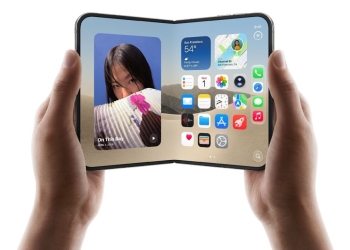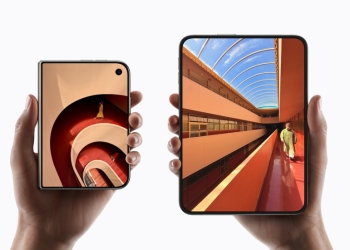


The fix for the foldable crease looks like it is coming from a component supplier rather than from any one phone maker. Korean supply-chain outlet The Elec reports that Google, Oppo and Vivo are all working with Samsung Display on dual-UTG panels for their next foldables, and that the Pixel 12 Pro Fold will use what is apparently the same display technology as Apple’s first foldable iPhone. This is a supply-chain report, not an announcement, and Google has confirmed nothing.

What a dual-UTG display actually changes on the Pixel 12 Pro Fold
UTG stands for ultra-thin glass, the flexible layer that sits over a foldable’s inner screen. Today it goes on top of the OLED panel and nothing else. The dual-UTG approach adds a second glass layer underneath, supporting the panel from below.
The point of that second layer is structural. A folding OLED sags slightly along the hinge line, and that sag is what your eye and finger register as a crease. Sandwiching the panel between two glass layers holds it flatter across the fold.
Samsung Display would build the display and UTG assembly to each customer’s specification, so the panels will not be identical across Google, Oppo and Vivo. The underlying construction would be.
Why Google is the one that needs this
The Pixel 11 Pro Fold is a competent foldable, but its crease is visible in a way rivals’ are no longer. Samsung reached a flatter panel a different way. Its own engineering account of the Galaxy Z Fold 8 credits a titanium-alloy film and a precision-engineered titanium plate under the display, which it says cut display module thickness by 10% and reduced crease visibility. Honor and Oppo have shipped their own solutions.
Google has not, and buying the fix from Samsung Display is the fastest route to parity. It is also worth being clear about what that means. If the same panel construction ships in Pixel, Oppo, Vivo and iPhone foldables, the crease stops being a differentiator between brands. It becomes a generation marker separating 2027 foldables from 2026 ones.
When this would arrive
The report puts Oppo’s and Vivo’s dual-UTG foldables in the first half of 2027. Google’s next foldable is placed in the second half of 2027, which fits its usual Pixel launch window rather than any specific date.
For anyone weighing a Pixel 11 Pro Fold now, that is roughly a year of waiting on an unconfirmed report from one supply-chain outlet. Component plans this far out change, and a panel decision reported in 2026 is not a shipped phone in 2027. Nothing here is worth deferring a purchase on unless the crease is already the thing stopping you.
Source: The Elec, via 9to5Google