

Samsung has told a Galaxy Z Fold 8 owner in South Korea that the phone’s inner display sinking slightly at the corners is a designed feature, not a manufacturing defect. The explanation, sent through a customer-service email and reported by South Korean outlet Business Post, comes after weeks of owners on X and Samsung’s community forums asking whether their Fold 8 and Fold 8 Ultra screens were faulty.
What owners are seeing on the Galaxy Z Fold 8
The complaint is specific: pressing on the outer corners of the main inner display causes it to depress noticeably more than the rest of the panel. Some owners posted videos comparing units side by side, and Business Post says it verified the effect itself on a retail 256GB white Fold 8 bought off the shelf. That detail matters, because Samsung’s own explanation admits the sinking varies “noticeably” from device to device — the exact point buyers are most likely to push back on.
A customer who filed a support ticket about their SM-F976N unit received a written reply from Samsung Electronics Mobile Phones, later published in full by SamMobile. The relevant part reads:
“This is a normal design feature applied to protect the display and enhance durability, and it does not affect product performance, so please use it with confidence.”
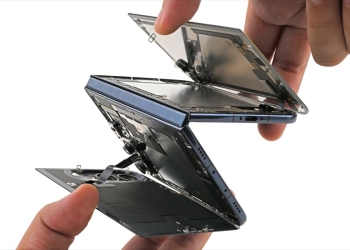
Samsung’s explanation is that the Fold 8’s display has a cushioning structure built into the outer corners, meant to protect the panel during use and folding. To make room for that cushioning, Samsung leaves extra clearance in that area of the display assembly, which is what lets the corners flex when pressed. The company says this is meant to reduce stress between the display’s internal layers, not create it.
Why this wasn’t explained before it became a support ticket
There’s a gap worth naming here. If the cushioning and clearance are intentional, standard design elements applied to every Fold 8 and Fold 8 Ultra, Samsung had that information before the phones shipped in August. Business Post’s own reporting quotes a Samsung representative saying the company didn’t publish anything about it upfront because it’s a feature meant to go unnoticed by users — not something it planned to explain unless asked. That’s a defensible engineering tradeoff, but it also means owners spent weeks worrying about a defect that Samsung could have flagged in a support article on day one.
It also leaves an unresolved question for anyone comparing units in a store or with a friend: if the flex is by design but varies between individual phones, there’s no simple way for a buyer to tell “normal for this design” apart from “worse than it should be” without Samsung publishing a tolerance range, which it hasn’t done.
What to do if you’re concerned
Samsung’s stated remedy is the same for every case: bring the phone to an authorized service center for a physical inspection. If your unit’s corners don’t just flex under pressure but also show separation, discoloration, dead pixels, or the flex worsens over time, that’s a different situation from the cosmetic give Samsung is describing, and it’s worth having it looked at rather than assuming it’s covered by this explanation.
Sources: Business Post, SamMobile